


The Sustainable Business Initiative helps community-based NeighborWorks organizations strengthen their foundations and grow revenue. In 2024, the SBI provide seed grants to seven network organizations with promising earned revenue strategies. Over the next few weeks, as part of Small Business Month, NeighborWorks will highlight some of those outcomes.
In Chattanooga, Tennessee, as in other places across the country, families face a widening affordability gap. Median home prices hover around $330,000, while many families can only purchase homes closer to $260,000. This $70,000 difference leaves first-time and moderate-income buyers locked out of ownership opportunities.
Chattanooga National Enterprise (CNE), a NeighborWorks network organization that delivers home repair, counseling programs, lending and home builds, wanted to address the problem head on. But high construction costs and constrained subsidies led the organization to stop building single-family homes in 2018. Could that change?
“We have a big gap between what our area median workers make and what is available to them to purchase,” said City Council Chairwoman and former CNE board Member Jenny Hill. “We have a lot of people at CNE that we know are qualified to purchase homes, they're just not capable of paying a mortgage on a $330,000 house…So we've got a lot of people sitting on the sidelines, paying high rent, waiting to find something that will work for their family.”
Even with rising land and labor costs and a shrinking supply of developable lots, CNE’s leadership knew it needed a new approach to deliver single-family homes at scale.
A $75,000 seed grant to CNE – one of seven NeighborWorks network organizations to receive such funding – allowed the organization to explore affordable single-family homebuilding using modular and other alternative approaches.
Early inspiration came from a NeighborWorks learning visit to DreamBuild in Kentucky, where CNE staff saw modular construction used effectively for affordable housing through another NeighborWorks network organization. The visit revealed how modular homes could streamline costs, improve quality control and drastically shorten build times, all of which would help address the increasing costs and extended timeline that accompany traditional construction. Through shorter timelines and reduced labor costs, this model would allow CNE to deliver homes at an attainable price point for local families.
Yet Chattanooga’s landscape posed a different kind of challenge. The city’s steep slopes, tight infill lots, and older neighborhood street grids made transporting and setting large modular sections far more complex than in the flat, open sites they toured in Kentucky. Delivering a single module often requires specialized hauling equipment, precise crane placement and unobstructed road access, all of which are difficult to guarantee in Chattanooga’s hilly neighborhoods.
While a direct copy of Kentucky’s DreamBuild proved impractical, the $75,000 SBI seed grant allowed CNE to explore how to adapt the model to its terrain.
Seeding Opportunity
With the funding in place, the organization was able to test modular construction as a viable option. The grant covered staff time to research and manage the effort, as well as partnership development, giving CNE the ability to engage with manufacturers, engineers and local trades to solve technical challenges. The team worked with manufacturers to identify smaller unit sizes, local assembly options, and hybrid designs that could make modular more feasible for urban infill. They also recognized modular’s potential to complement their stick-built approach, using modular for clustered developments where efficiency gains are highest, while continuing traditional construction for sites with access limitations.
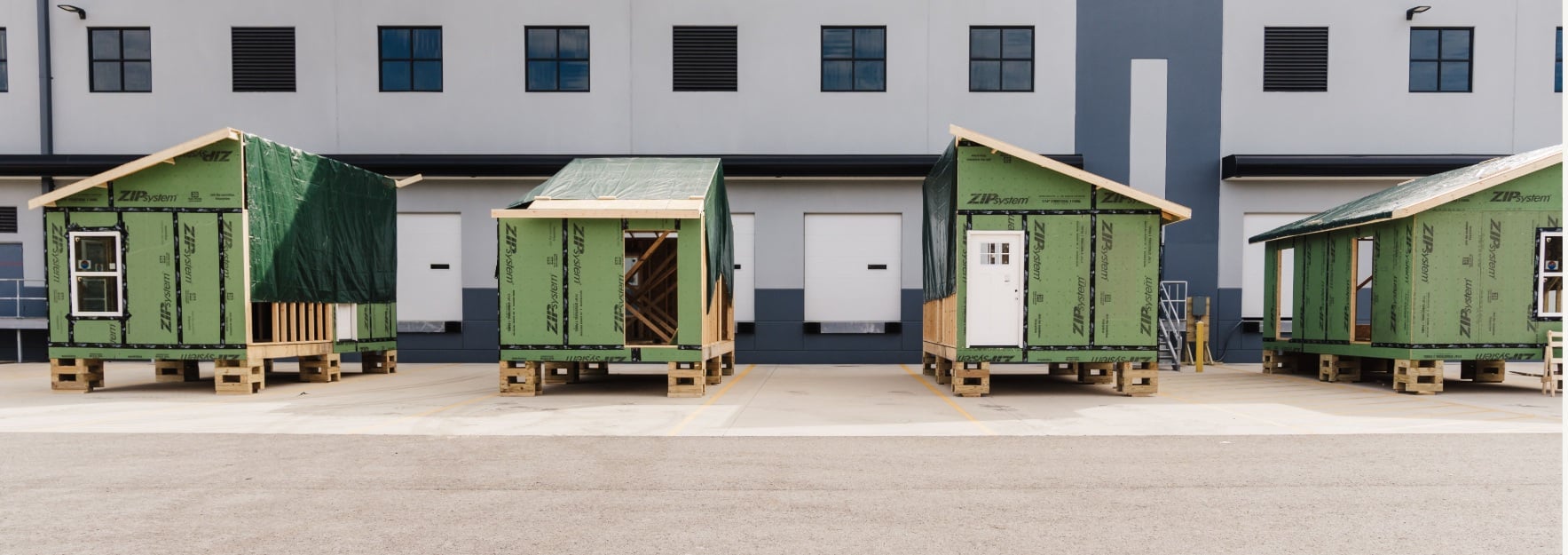
The first outcome was the construction of a three-bedroom modular prototype home, CNE’s first new single-family build since 2018. Completed at a cost of approximately $159,000, the CNE Homes prototype demonstrated that high-quality, energy-efficient single-family housing could be delivered at a price well below the city’s median price.
The prototype also dispelled the widely held perception that modular homes resemble “boxy” manufactured units. As CNE President & CEO Chris Thompson noted, “We challenge everybody that walks in to tell us where the boxes are. Nobody has succeeded yet.”
CNE is now exploring the option of placing this home in a new Community Land Trust, ensuring permanent affordability for future buyers. In the meantime, the home has been set in a neighborhood and is now open for tours, giving community members, partners and prospective buyers a chance to see firsthand what affordable modular construction can deliver.
“We want to show that…we can do this. There's the ability to do this, and this home proves it,” Thompson said.
Continuing the Impact
The success of the CNE Homes prototype laid the groundwork for the project’s next phase — transforming a single demonstration home into a replicable model for future developments. The team is now developing a scalable pipeline plan to secure new capital and resources, with the goal of producing 10–24 homes annually by 2027. The plan includes building additional prototypes to test different construction models, developing the Community Land Trust, and continuing to create and strengthen the manufacturing partnerships that make the construction possible.
By investing early in innovation, SBI enabled CNE to move from a pause in homebuilding to a pipeline of possibilities.
“The support from NeighborWorks has been critical for us to be able to embrace innovation as an organization,” said Hill.
“The organizations that received the Seed grants had all demonstrated strong potential for sustainable business growth,” said NeighborWorks America’s Alicia McCoy, interim vice president, National Homeownership Programs and Lending. “With the help of the grants, they are meeting that potential.”
Read all of our case studies.