


A treasured historic landmark in Houston has been restored, thanks to Fifth Ward Community Redevelopment Corporation (CRC). The NeighborWorks® network member organization, with its partner Cloudbreak Communities, recently transformed the former St. Elizabeth Hospital in Houston from a vacant shell to a flourishing apartment community named St. Elizabeth Place.
St. Elizabeth’s Hospital originally opened in 1947 to serve the city’s Black population during segregation. After the hospital closed in the 1980s, the building housed a substance abuse treatment facility. And after that facility closed, the property sat unoccupied for several years. 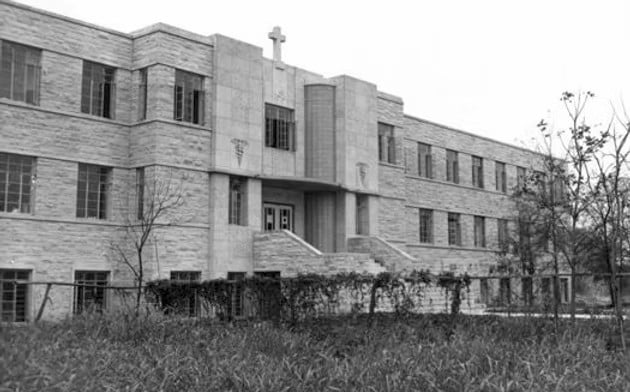
“It became an eyesore, rather than the point of pride and community that it once had been,” recalls Fifth Ward CRC’s president and CEO, Kathy Flanagan Payton. “It suggested a community that was dying, as opposed to a community that was thriving.”
The hospital holds special memories for many in the community, including Payton. “St. Elizabeth’s was a place where African-American women could receive quality, timely healthcare, particularly for the delivery of their babies,” she explains. “And that's particularly important to me since I was born there. My mother was also a nurse there, so this project was very near and dear to my heart, and it was truly a labor of love.”
One night in 2016, Payton and some of her staff saw a “for sale” sign at the property. “The next morning, we had it under contract, with help from our partners at Community Housing Capital, who availed resources for us to be able to acquire this property immediately,” she says. Community Housing Capital provides financing capital exclusively to NeighborWorks network organizations.
In developing the project, Payton says, the first priority was to acknowledge the historical significance of the building and its meaning to the community. “Our primary focus began with preservation,” she says. The team obtained state and federal historic tax credits and worked with a local architect who specializes in historic preservation to move forward. 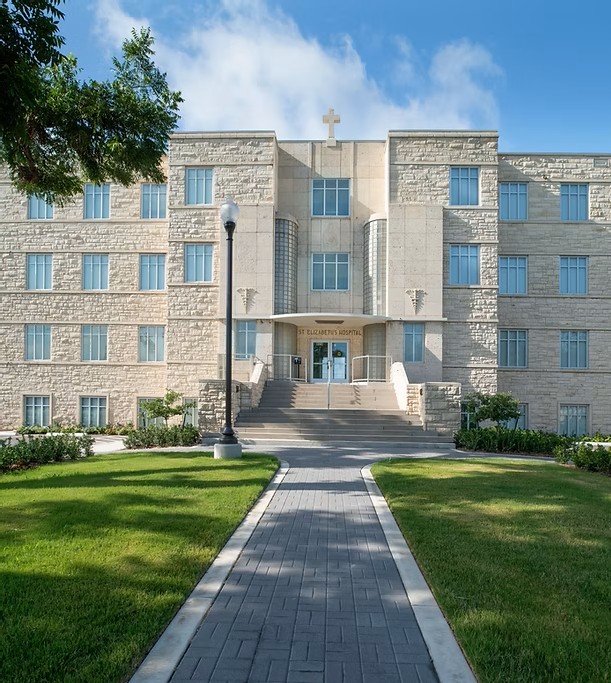
Recognizing the importance of St. Elizabeth’s for area residents, the development team solicited community input in discussions about the future of the property. “We had a number of community meetings where we talked about the possibilities for the property,” says Payton, “and our community said that it was critically important to increase the housing inventory.” She adds that area residents, for whom St. Elizabeth’s held historic relevance, were pleased to have a say in the property’s development.
A result of four years of work and a $29 million investment, the restored art deco building features 25 efficiencies, 51 one-bedroom units and nine two-bedroom apartments, offering a mix of deeply affordable, workforce and market-rate homes. Residents also benefit from community amenities such as a community room, an exercise facility, a business center and a pool. Environmental remediation, preservation of original terrazzo flooring and restoration of limestone and brick exteriors were key to maintaining the site's historic character.
“It's a mixed-income development, and we're excited about the opportunity for economic integration here in the Fifth Ward,” says Payton, adding that 51% of the apartments are reserved for low- to moderate-income families, and the remainder are market rate. She explains the benefit of mixed-income housing: “What we're trying to do is … not concentrate poverty in any one place. There's an opportunity in economically integrated housing for people to learn from one another, to share experiences and realize that there's more in common than there are differences. And that everyone desires an affordable place to live.”
Finding those places to live has become increasingly difficult with a housing shortage that especially is especially pronounced when it comes to affordable housing. Estimates of the shortage range from 3.7 million (Freddie Mac) to more than double that number. NeighborWorks network organizations like Fifth Ward CRC work on finding solutions and filling the gap.
Along with providing the new homes, Fifth Ward CRC offers support to all St. Elizabeth Place residents. “It's a place where people become our clients and a part of the Fifth Ward CRC family; they can begin to develop longer-term housing plans to transition into other housing opportunities, and they're welcome to participate in our programs that offer homebuyer purchase counseling and education, financial literacy, credit counseling and all those things that make for strong home ownership,” she says. “And notice I didn't emphasize lower- to middle-income families, because our programs are not unique to low- and moderate-income families. We offer those classes and counseling services throughout Houston and throughout Harris County.”
One St. Elizabeth Place resident is especially invested in Fifth Ward CRC and its mission. Rah’Quavian “Raq” Glover, a recent graduate of Texas Southern University, began his career as an intern there and now serves as an intake specialist. He works on the Homeownership Promotion and Preservation team, where he promotes homebuyer education classes and prepares participants to enroll.
Payton describes the importance of hiring young people in the community development field. “We're building a pool of qualified younger people to assume the role of the aging generation and invest in the next generation of leadership," she explains. “This is part of an effort to support ongoing economic development into the future.” Glover, who majored in marketing, says, “I always liked working with people, and this work translates to a change in the community that I actually live in.”
Not far from St. Elizabeth Place is another historic Houston hospital that experienced a transformation. The former Jefferson Davis hospital stood vacant and abandoned for many years before NeighborWorks network member Avenue redeveloped it. The building re-opened as the Elder Street Artist Lofts in 2005. Twenty years later, says Mary Lawler, Avenue’s chief executive officer, the 34-unit building is one of Avenue’s most sought-after properties. “The building is an amazing piece of architecture,” she says, especially for Houston where we don’t tend to preserve a lot of historic buildings.”
Both of these developments highlight the success of NeighborWorks network organizations working to create homes and build America.
According to Sheila Anderson, senior director, Western Region, at NeighborWorks America, NeighborWorks supports this work in a number of ways. “In addition to grants, NeighborWorks offers opportunities for training, as well as peer-to-peer sharing,” she says. “This is important because it allows organizations to share insight into everything from design to pursuing tax credits. Having a network of organizations that have done this type of work allows others to benefit from their experience.”
Anderson says St. Elizabeth Place represents more than providing a home for the residents. “It represents a celebration and preservation of history, culture, and community,” she says. “It’s about serving different groups for different reasons: for legacy residents, it’s the celebration of their history, traditions, and uplifting memories; for those new to the neighborhood, it’s an introduction to the stories and heritage of a community they now call home.”
Payton echoes this sentiment, saying it’s important to preserve properties like these, not only in Houston, but nationwide. “This is more than a building, St. Elizabeth Place is a promise kept to this community,” she says. “We’ve honored the past while building for the future.”
To hear more from Kathy Flanagan Payton, listen to her conversation with NeighborWorks President & CEO Marietta Rodriguez on The Community Effect podcast. Part 2 of our podcast will air soon!