

NeighborWorks® network organizations will have a chance to meet with industry partners, engage with one another, and address housing challenges together during a brand new Housing Supply Solutions Lab. The lab will take place on Wednesday, Feb. 25, during the NeighborWorks® Training Institute in Chicago, Illinois.
“It’s created for the network and by the network,” explained Cormac Molloy, director of Sustainability & Resilience at NeighborWorks America. The interactive lab, an all-day event, replaces the symposium, usually held midweek during NeighborWorks’ premier training institute.
Speakers include staff from network organizations who have dealt with challenges including zoning, escalating insurance rates and preservation, and who have had success in mitigating those issues as they continue to create and build homes – and build America. Industry leaders will also speak. Chris Herbert, managing director of Harvard University’s Joint Center for Housing Studies, will deliver the keynote address.
Herbert, who worked at the Joint Center for Housing Studies before becoming director in 2015, says he has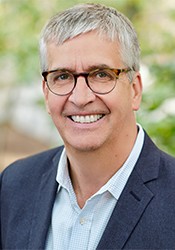 spent the last five years asking himself the question: “Why is housing so wildly unaffordable and what can we do to make it more affordable?” Solving the challenge means attacking it from multiple angles. “I’m firmly in the all-of-above camp,” he said.
The Housing Supply Solutions Lab will focus on three of those angles: innovative building techniques, including manufactured, modular and 3-D housing; zoning and land use solutions that support density and accelerate development of affordable, resilient homes; and housing attainability strategies to address rising costs, including shared equity housing models.
In today’s housing landscape – which many refer to as a housing crisis – we are at a point where a record number of renters can no longer afford their rent, Herbert said. Meanwhile, “homebuyers are facing the most unaffordable conditions in a generation or more.”
Unlike past housing crises, the cost burden has moved up the income scale over the past 20 years, leaving middle-income households struggling with housing affordability. And the problem as a whole isn’t something we can build our way out of, Herbert said. “There are multiple problems and not just one solution.”
We have to make improvements in building – something network organizations will discuss during the solutions lab – and we need to make better use of the land, Herbert said. “And we have to consider the costs.”
The solutions lab will also provide plenty of time for network members to engage with one another. One of the best things about being part of the network is that when you have a specific problem, there’s usually someone else in the network who has seen it before, Molloy said. And while what someone encounters in the south may not be the exact same thing they encounter in the western region, exchanging ideas and solutions goes a long way toward moving the needle on some of the larger issues in affordable housing and community development.
“It’s a chance not just to show off the network and meet more partners, but to have the network connect with each other,” Molloy said. “The best way to solve our challenges is together.”
Charlie Wesche is CEO of NeighborWorks Lincoln in Lincoln, Nebraska, a network organization currently celebrating its 40th anniversary of serving the Lincoln community. The organization is known for opening doors to homeownership through down payment assistance and real estate development. For the solutions lab,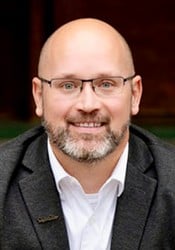 Wesche will be discussing a shared equity approach that began in 2020. With support from NeighborWorks the organization started researching shared equity housing for single-family development. “We determined a community land trust (CLT) best fit the needs of the community,” he said. “The Prairie Roots Community Land Trust (PRCLT) – a wholly owned subsidiary of NWL – was established in late 2022 with the sale of three homes.”
Today, PRCLT has a portfolio of 23 single-family homes, with another 17 in the pipeline for 2026. PRCLT also manages six apartments and four commercial units, with a goal of having 75 units held in the trust by the end of 2027.
The interest in shared equity came from trying to find a tool that would create permanently affordable homes, provide a better return on public subsidies, and make homeownership a reality for Lincoln’s low- to moderate-income families, Wesche said. “With constantly escalating construction, land, and insurance costs, finding a solution to leverage subsidy in a permanent way – instead of a 'one-and-done' approach – was critical.”
Wesche will talk about the model, the obstacles and the successes. “PRCLT is still relatively new/young but is proving to be a very good solution in Lincoln,” he said. “The experience and success of PRCLT have led to discussions with stakeholders in towns and cities across the state. Hopefully, those lead to an increase in housing with lasting affordability statewide.”
But along with spreading information statewide, Wesche wanted to be able to share information with the NeighborWorks network. “Centering shared equity approaches in this venue not only provides an opportunity for exposure to new ideas, but refinement of existing ideas,” he said. “Iron sharpens iron!”
Register for the Housing Supply Solutions Lab when you sign up for the NTI in Chicago! For network staff who need assistance, reach out to Customer Experience at [email protected].