


This past week has much of the nation focusing on weather conditions and forecasts. At NeighborWorks® America, Chief Operating Officer Lee Anne Adams is also looking at the conditions for the housing market, as NeighborWorks and the network focus on scaling solutions for the year ahead.
NeighborWorks beat its collective target last year for creating homeowners with 17,600 from among the nonprofit’s nearly 250 network organizations, which bodes well, she said. She attributes some of that to the education and housing counseling that are an integral part of the network.
“I think there are some lessons in how our organizations are doing that, which are relevant for the broader market to understand. All of the preparation that goes into working with new homeowners is really important,” Adams said. “There’s a trusted relationship, and that helps homeowners navigating an increasingly complex process.”
Housing counselors help match clients with down payment assistance, first-mortgage loan products and more. That same preparation could be why NeighborWorks’ first-time homeowners averaged 36 years in age in 2025, as the National Association of Realtors recently posted the median age of first-time homeowners at 40 – the highest age yet.
The combination of approaches in building homes – both for rent and for ownership – also leads to more families living in those homes, she said. She spotlighted organizations like Homewise, which offers a full suite of counseling, lending, credit readiness and first-mortgage lending, while developing single-family homes. And Frontier Housing in Kentucky is replicating a housing model developed by come dream, come build, another NeighborWorks network organization in Texas. “They’re adapting to meet their community’s needs,” Adams said. “Our organizations are looking at all kinds of construction.”
Whatever the market conditions, Adams said, NeighborWorks’ focus remains centered on making sure people have a place to call home. An emphasis on housing the workforce is a part of that.
“When we start a new year, we always have lofty goals, but one of the things we really wanted to do was ground our goals in reality,” Adams said.
That can be difficult when there’s so much uncertainty in the marketplace. Nonprofits rely on a mix of funding, she said, and in these times, funding can be uncertain, too. “Our goal is helping organizations look at their business models, and at revenue diversification. We’re seeing a lot of local jurisdictions step in with resources to help close deals, to invest in the community.”
NeighborWorks’ upcoming Housing Supply Solutions Lab in Chicago is another way of putting network members in touch with both potential partners and with new strategies such as zoning changes and building techniques.
It’s a good introduction to what Adams expects to see in the new year: replication and scaling of innovations and ideas that work for multifamily and single-family homes.
“When there’s proof of concept, other people can take those lessons and apply them in their communities,” Adams said, adding that the network “is rich in innovation.”
That may mean 3D housing, as in the Corporation to Develop Communities of Tampa, Inc. Or it may be layering tools to win grants and develop homes, as in the case of Community Housing Partners (CHP), which makes a good case study, Adams said.
Stroubles Ridge: Layering innovations
CHP is in the midst of developing 46 single-family homes, using two different approaches at the same time to keep housing affordable. Jake Powell, CHP’s director of homeownership, spoke about the project, known as Stroubles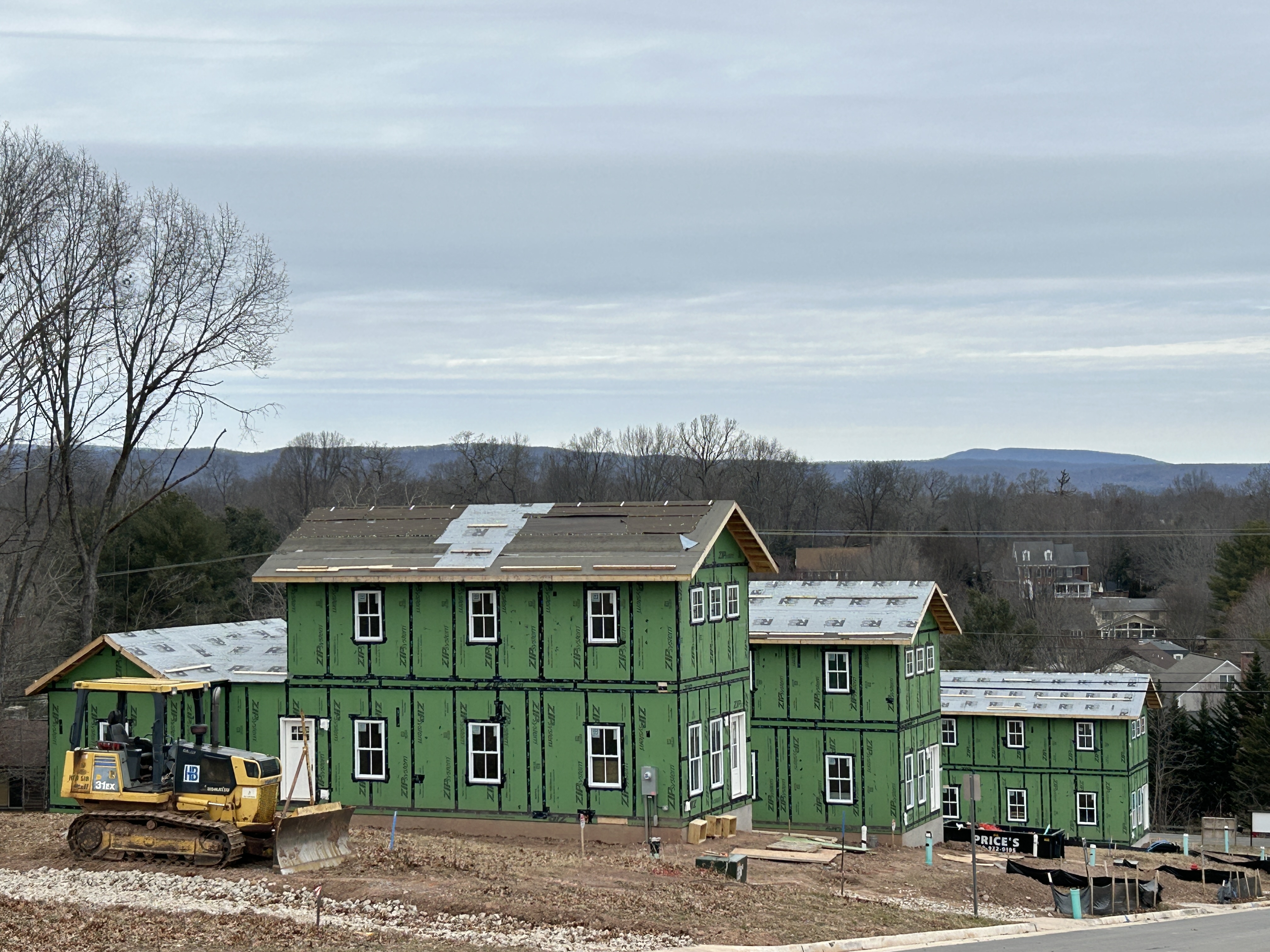 Ridge. The development is set on the outskirts of Blacksburg, Virginia, a university town that grows when the university does. Currently, he said, the average home price is $500,000, but the median income supports a $300,000 mortgage. The town relies on the university and the two have a symbiotic relationship. But the school’s push to enroll more students has a direct impact on housing affordability.
“When I talk about it, even though it seems unique to us, people will say ‘Oh, that sounds like my town,’” Powell said. As the university has grown, students have spilled into the housing market. “It happened quickly. With more people pushing in, that pushed up prices” for both owned homes and rentals. Add that to a growing economy built around the university’s research, “and it was the perfect storm. Of too much growth. The town couldn’t support it.”
While CHP’s focus has been multifamily homes, Powell’s role has been to add to the single-family side. To do that, he needed grants and investments. He went to the state with competitive applications, he said. But each time, he got turned down – one of the highest scores to ever be denied, he was told. It was multifamily developments that were getting state money, because of the scale.
But state leaders had been talking about the importance of homeownership, regardless of political party. So, when he talked with the state about a proposed development of single-family homes on a community land trust, he emphasized the lasting affordability – keeping the homes affordable for the next owner and the next. “Your one-time investment will serve multiple generations,” he explained. “Isn’t that worth some extra points?”
The state decided it was, and on his next application, they awarded him five extra points for the lasting affordability — and the funding he needed to start the project. Though CHP will remain the owner of the land trust, the town of Blacksburg and Montgomery County are also funding that part of the project – the community partners Adams mentioned earlier.
Powell also chose modular homes for the property to add to the affordability. The homes can be built quickly while maintaining quality, another benefit. Even during January’s snow and ice storm, the homes were being constructed inside a Pennsylvania manufacturing facility. When the snow finally melts and the foundations go in, he said, the homes will be driven up winding Merrimac Road and put into place. With stick-built homes, he said, it would be impossible for his organization to build this many houses in a year.
The first 20 homes, which will sell for between $240,000 and $260,000, will be completed in 12 to 18 months. The next 26 homes will follow, and all will go to families under 80% AMI, and the homes are in range for families earning 60% AMI. It’s the largest single-family development CHIP has ever built. But Powell can see others following.
“If we can reframe this idea of return on investment, not just with state funders but with mission-minded funders, we can attract capital for single-family projects,” he said. “That’s what’s going to let me scale.”
Across the network
Adams sees innovations and the scaling of those innovations across the network every day. She expects to see even more of it.
Her forecast for the year ahead? “Cautious optimism,” she said. “The network is so resilient and so creative. They adapt. It is so exciting to see our groups innovate. NeighborWorks is glad to be a part of supporting that innovation with replication, testing, learning and sharing.”