

NeighborWorks® America launched its Community Leadership Institute (CLI) this week with a commitment to resident voices, a commitment that is renewed every year. This year, 60 teams of community leaders gathered in Minneapolis, Minnesota to learn, to connect and to commit to making their communities stronger.
One participant, a police officer from Boston, accompanied a team from the community she works with every day. Another brought a group of teens from Pontiac, Michigan. It was their first time on a plane, she said, and she was reminded that a community group also arranged her first flight on a plane when she was a teen, also on Halloween weekend. 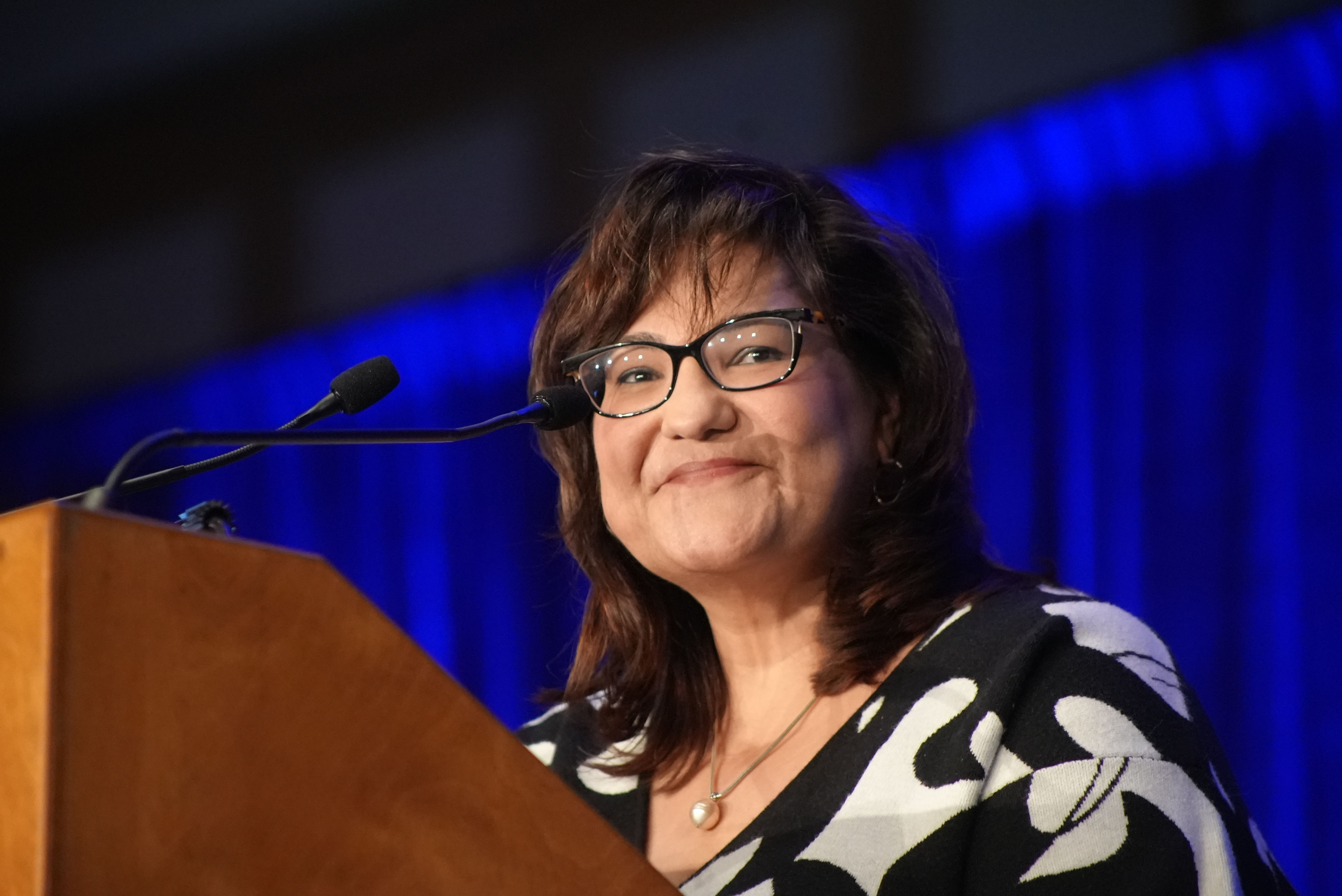
Jenece Howe, program manager for Yakama Nation’s Village of Hope, was excited to connect with people on transitional housing that could help her community. “We want to explore this subject and connect with others on the subject of resilience, hope, and affordable homes,” she said.
Nancy Graber, meanwhile, was looking forward to developing a project that would help her community in Goshen, Indiana.
Leslie Stafford, health equity and wellness manager for Madison Park Community Development Corp., has been to the CLI for a decade. “I love the connection,” she said. “I love to receive information.” But she also likes to offer it, especially when it comes to team building.
The weekend was filled with inspiration and determination, from the NeighborWorks staff and faculty, from special guests and most of all, from the residents themselves.
“You are the experts that have collective knowledge to build a stronger country,” Paul Singh, NeighborWorks acting senior vice president of National Initiatives, told the teams. NeighborWorks will provide each team with a grant to help fund projects that in the past have ranged from cleanups to murals depicting community history to setting up food pantries. The projects reflect the power of community.
Inspiration and energy
“If you are a leader you don’t have to say it; people will know,” said Barry Hand, director of the Owámniyomni Okhódayapi program, said during an opening session. He encouraged the participants to connect with one another and with the world. In Native cultures, there is no argument over religion and who is right, he said. “In the creation story, we were created last,” he told the leaders, because all of the creatures and life that was created before us does not need human kind. “They do not need us. We need them.”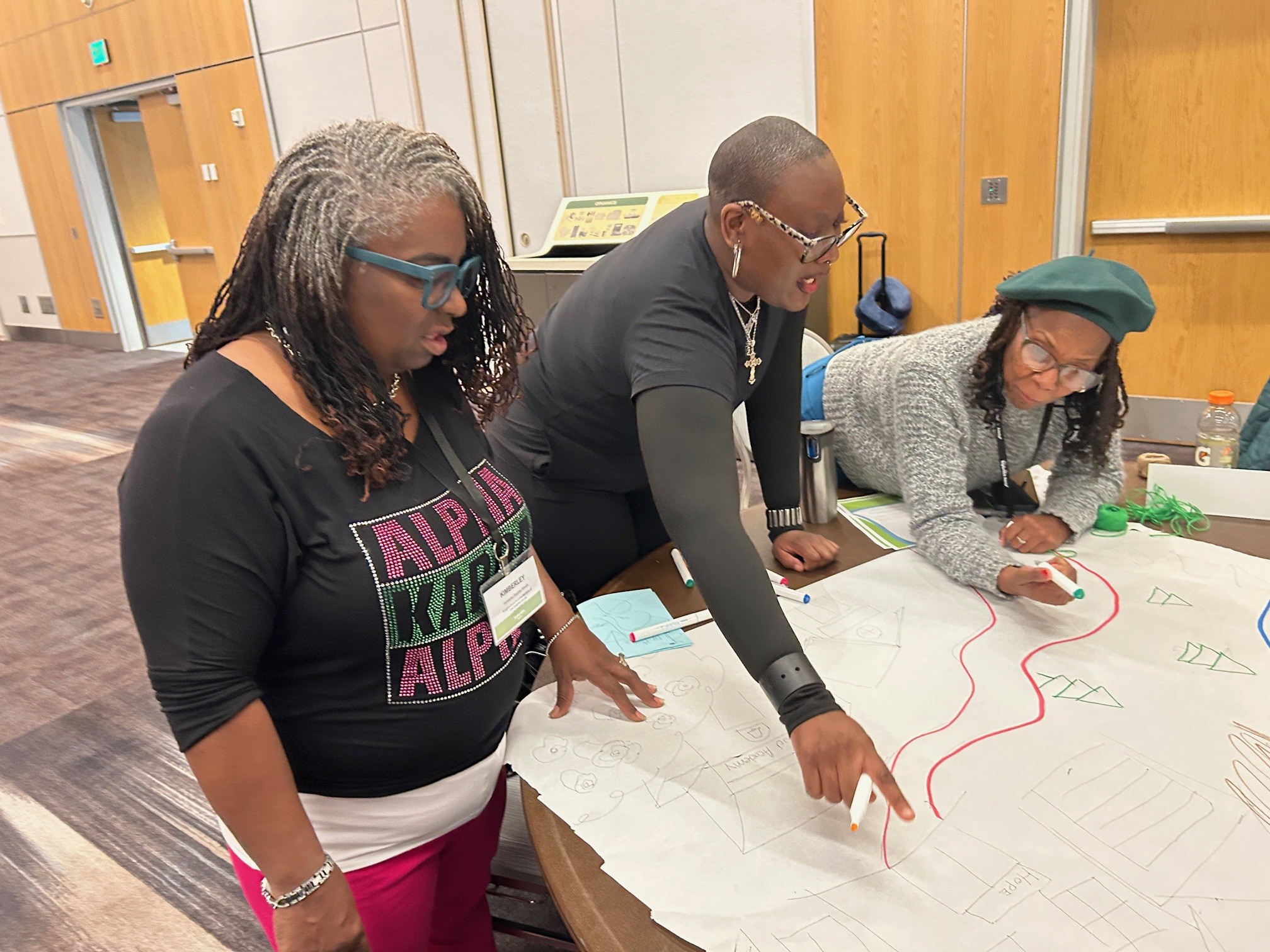
This year, there were four Native groups among the teams. Last year marked the first time a Native team attended the CLI, with Hawaiian Community Assets, which created a mural project. This year, the team was back with eight community leaders.
Mel Willie, senior director of Native and Strategic Partnerships, helped all of the teams connect during the opening plenary, asking groups to consider their individual backgrounds – and what connected them.
“May we always welcome beauty,” he shared. “Our footsteps are sacred because where we walk, others will follow.”
Building bridges
Facilitators traci Kato-Kiriyama and Darryl Answer grounded the participants, encouraging them to make connections and build bridges.
They also led the group in imagining ways to help their communities grow and thrive. One group talked about a continuing food desert in her part of Kansas City and the need for a food truck, with a song like the one that draws children to an ice cream truck, announcing fresh groceries on wheels. Another imagined a wheelchair ramp that would rise out of the sidewalk in response to a bar code, providing instant accessibility. One woman talked of simply sharing keys with neighbors, to help one another in an emergency. And another group talked about providing WiFi on wheels for communities in need – something a number of nonprofits provided during the pandemic so that people could work from home and school kids could go to school online.
“People,” the resident said, “just need access.”
A welcoming city
Two Minnesota network nonprofits – Aeon and Common Bond – co-hosted the event.
Aeon was formed after the convention center – the same center that hosted the leadership institute – altered the community and displaced residents. “To build it, a lot of old housing was torn down,” said Caroline Horton, interim CEO. Neighbors and churches worked together with government agencies, and the organization was born.
“Over the years one thing has been abundantly clear,” Horton said. “Resident voices are essential in our work.” That’s why the Community Leadership Institute is so special, she said: It’s building and strengthening leadership, “learning and growing together in community.”
Common Bond has spent more than 50 years strengthening communities in St. Paul, with a mission that every person has a safe, dignified place to call home. Tasha Alexander, head of Common Bond’s board, called housing both “critical and essential.”
She was grew up in a home that was classified as “affordable housing,” she said. “It gave me a chance to build a foundation. Now I’m here as chair to pay it forward so the next person will have the same opportunities I once had.”
She urged the residents to get energized and inspired. “We can make an impact together.”